
Choosing the Right Carbon Fiber Finish for Your Custom Printed Artwork
When it comes to applying a graphic design to a carbon fiber frame, custom Printed Fabric Sleeves and Printed Vinyl Wraps can produce very different finished results. While both options are designed to give a prosthetic frame a customized graphic appearance while preserving the strength and lightweight benefits of carbon fiber (CF), the final look can vary dramatically. Understanding these differences is essential if you want to choose the finish that best aligns with both your aesthetic and prosthetic goals.
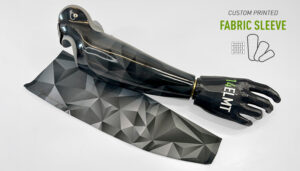
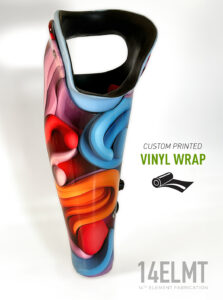
What Are Laminated Fabric Sleeves?
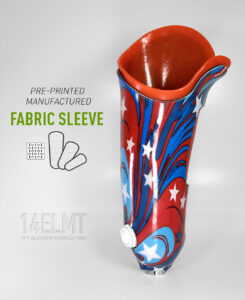
Laminated fabric sleeves are made from woven material that is cut, sewn into a sleeve shape, and then laminated with resin over a carbon fiber (CF) prosthetic frame for durability and appearance. Fabric sleeves used in orthotics and prosthetics fabrication can be custom-made from an existing piece of fabric, such as a cotton T-shirt, or purchased from a manufacturer. Fred’s Legs is a popular O&P source for pre-printed graphic sleeves and will also do custom sleeve printing.
The amount and direction of stretch in the fabric are important factors in determining whether it is suitable for use as a sleeve in O&P fabrication. Too much stretch, too little stretch, or stretch in the wrong direction can cause problems during fabrication and result in a poor final product.
Depending on the fabric and weave, the appearance of a custom print can also be affected by how much the material stretches over the frame (and the surface color of the frame). The more the fabric stretches, the more space opens between the fibers, allowing more of the underlying surface and its color to show through. Because the underlying surface may be partially visible, carbon fiber frames, which are often black, typically require a heavily white-pigmented first lamination to preserve the vibrant colors of the sleeve.
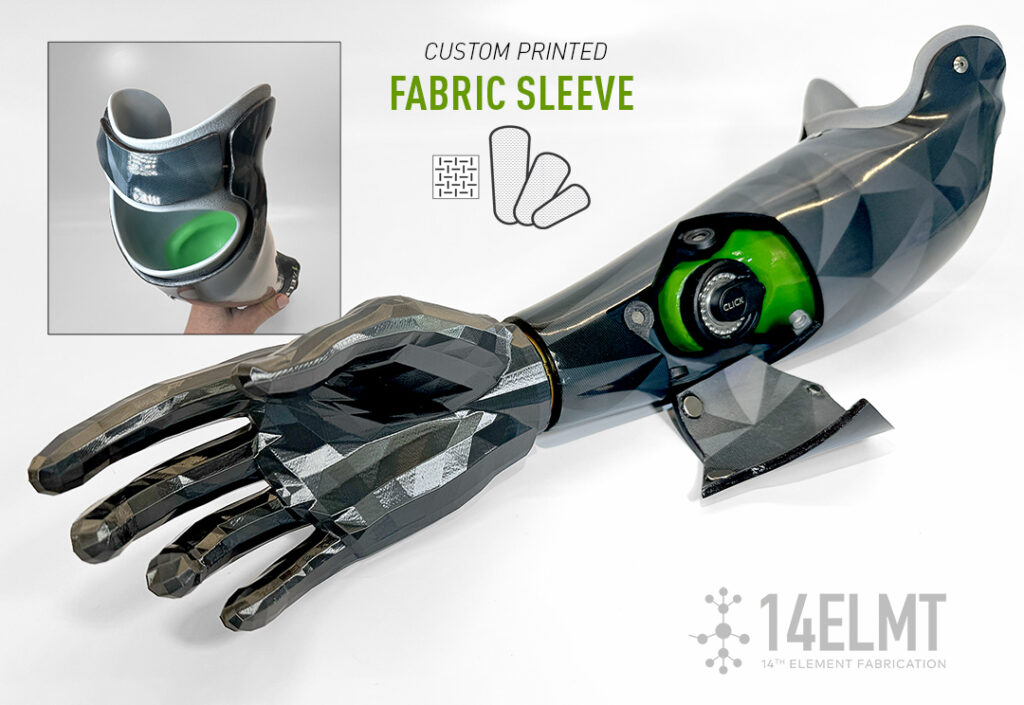
In short, the stretch of the fabric and the color of the underlying frame both have a significant effect on the final appearance of a laminated fabric sleeve.
What Are Printed Vinyl Wraps?
Printed vinyl wraps are an alternative CF cover material used to achieve a customized finish. These wraps are created by printing a custom graphic onto specialized vinyl that has some stretch, which is necessary for O&P fabrication, but with less variability than fabric. The base vinyl is typically white or another light color. Because the vinyl is opaque, the color of the underlying carbon fiber does not affect the appearance of the finished wrap.
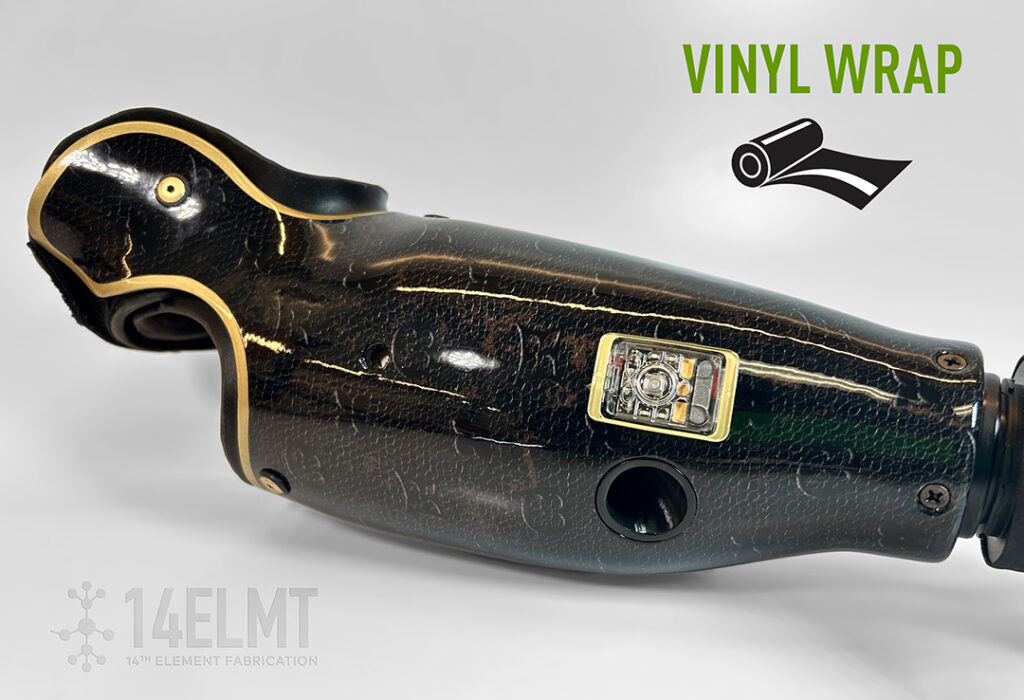
In standard printing, the graphic is reproduced on the vinyl surface using CMYK (Cyan, Magenta, Yellow, and Black) inks. The range of colors that can be printed is limited to what can be achieved using these inks alone or in combination. White areas in the image are created by allowing the white base vinyl to show through. These printing limitations also include metallics, since true metallic colors cannot be achieved through standard printing.
Key Differences in the Finished Result
The prosthetic transradial frame on the right showcases both a custom printed vinyl wrap (left) and a printed laminated fabric sleeve (right). The same art file was used to custom print on an O&P fabric sleeve and also on a vinyl wrap. Both were applied to a single carbon fiber frame so that one half shows the vinyl wrap (left) and the other half shows the laminated printed fabric sleeve (right). This demonstrates how the two different frame finish options can yield very different finished results.
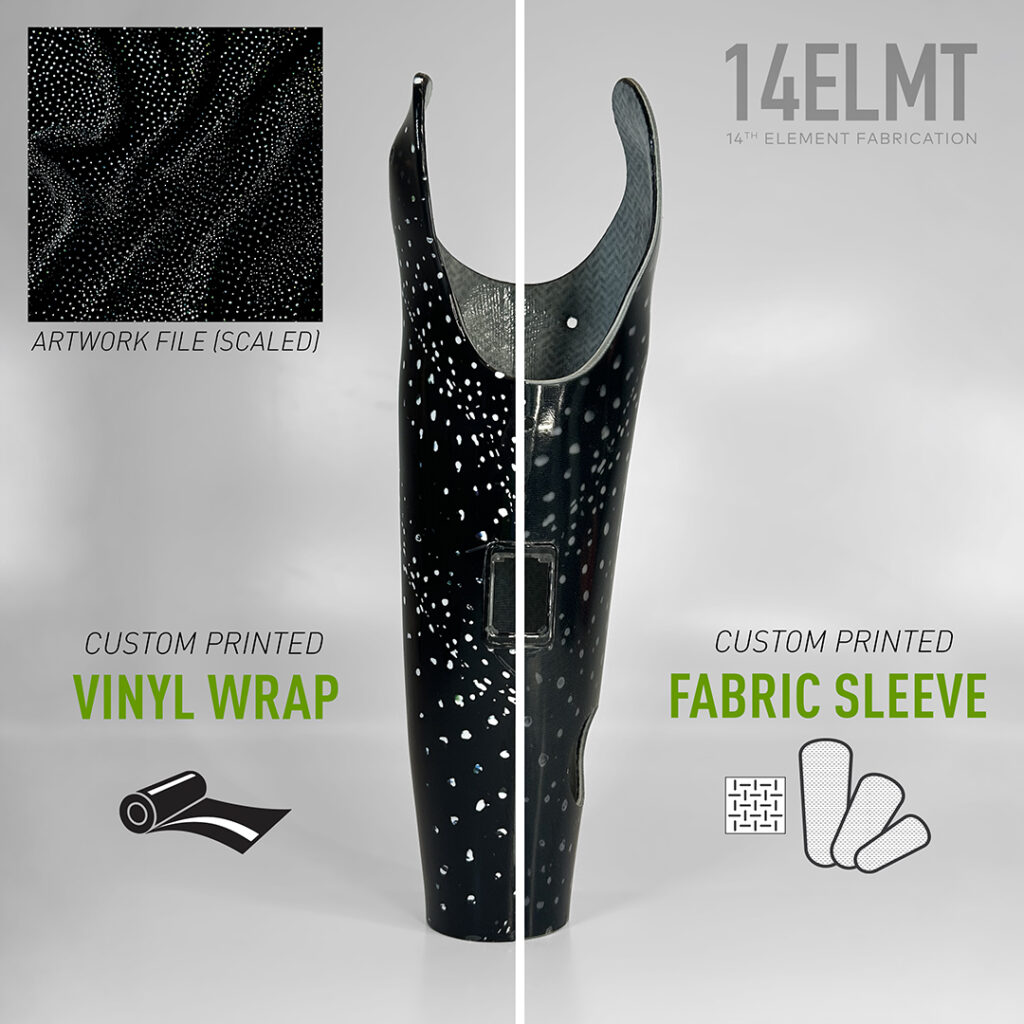
Although both options can deliver a beautiful finished appearance, choosing the right fabrication method for your chosen custom graphic is key. The following general guidelines will help you determine which method is best for your design:
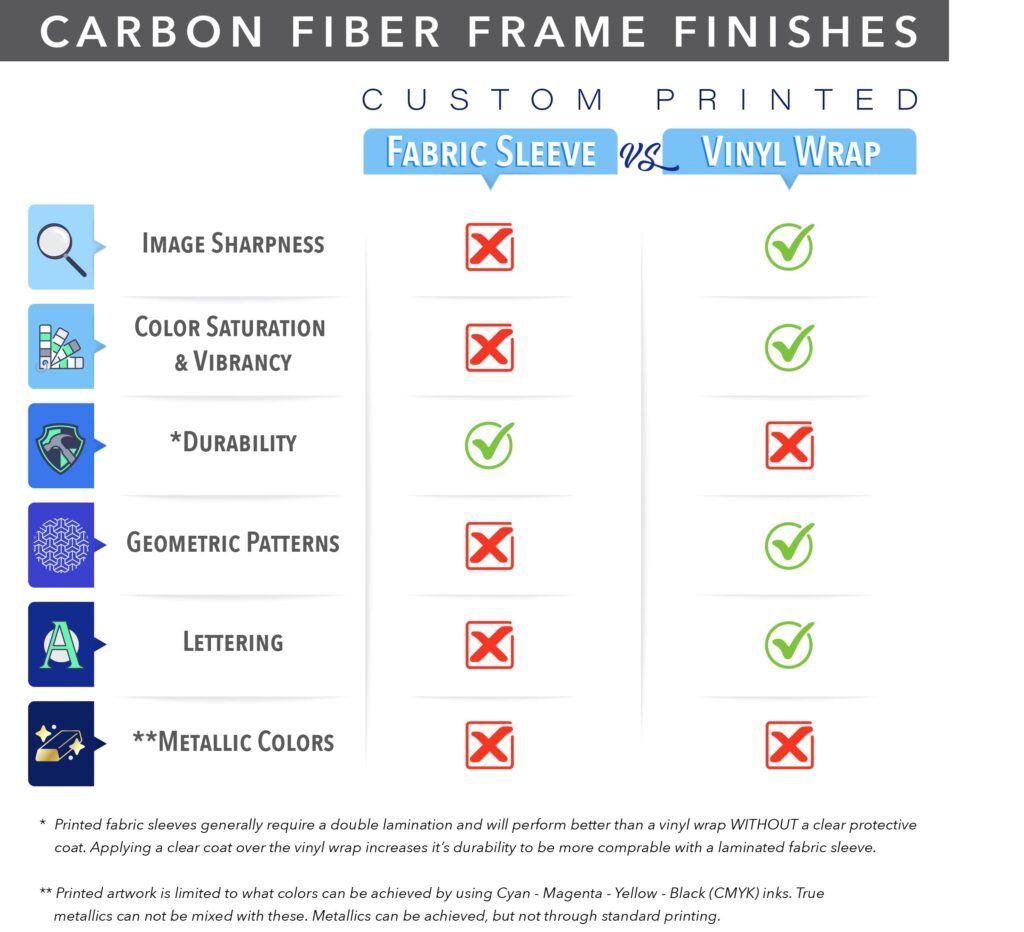
- Image Sharpness: Printed fabric sleeves typically produce a softer, less crisp look than vinyl wrap prints, which can create the impression of reduced resolution. Vinyl prints generally appear sharper and preserve fine details better.
- Color Saturation & Vibrancy: Fabric sleeves may show less contrast between high-contrast colors like black and white, so blacks may appear more charcoal than deep black.
- Durability: Because fabric sleeves sealed into the lamination they may perform better than a vinyl wrap without a clear protective coat. Applying a protective coat to a vinyl wrap can bring its durability much closer to that of a laminated fabric sleeve.
- Geometric Patterns: Because vinyl offers less material stretch and sharper printed fidelity, geometric or symmetrical patterns generally appear better on printed vinyl.
- Lettering: Vinyl prints usually produce better results because of their greater sharpness. Lettering on fabric sleeves can appear “fuzzy” or slightly out of focus.
- Metallics: Standard printing, on either fabric or vinyl, is limited to what colors can be achieved by using Cyan, Magenta, Yellow & Black (CMYK) inks. True metallics can not be created with this process.
Alternatives do exist, like using a pre-printed fabric (e.g., T-shirt, fabric from a bolt, etc.) and custom sewing a sleeve from that material, opting for a vinyl decal (with smaller coverage) with an off-the-shelf metallic vinyl over a global wrap, or selecting specialized printing with metallic inks (more costly).
How to Choose the Right Option
Your choice of material for a custom print should be based on both the graphic itself and the shape of the prosthetic frame. If you want a softer look and need the greatest durability, a laminated fabric sleeve may be the best choice. If your printed graphic needs to retain sharp details, a printed vinyl wrap may be the better option.
Understanding these differences can help you and your patient achieve the look and performance you want from a custom prosthetic frame.
Final Thoughts
The difference between custom printed fabric sleeves and printed vinyl wraps goes beyond the material itself – it affects the entire finished result. By understanding how each finish looks and performs, you can make a more informed decision and choose the carbon fiber finish that best fits your project.
While these two carbon fiber finish techniques cover most custom print requests, other finish options are also available, including combo laminated sleeve and vinyl, airbrushing, custom sewn fabric sleeves, and more.
At 14ELMT, we’re happy to help you navigate these choices so you can get the result you want.